- Lil' Signals
- Posts
- Lil’ Signals : The BAFTAs Incident Was Not the Whole Story
Lil’ Signals : The BAFTAs Incident Was Not the Whole Story
What happens when racism, disability, and media incentives collide on the same stage
Khalil El-Amin
February 25, 2026
👋🏾 Hey There!
Lil’ Signals is your go-to newsletter for decoding the cultural currents shaping our world. Powered by Nichefire, we break down trends, tell compelling stories, and share actionable insights on how to tap into the power of cultural listening.
Stay ahead of the curve, one signal at a time.
This week, I want to talk about a moment that stuck with me for two days straight.
At the 2026 BAFTAs, while Michael B. Jordan and Delroy Lindo were presenting onstage, someone in the audience shouted the N-word. If you’ve ever heard that word aimed at you, you already know, your body reacts before your brain can catch up.
Then the context dropped, and it complicated everything. Then the broadcast decision complicated it again.
So this isn’t just “an awards show incident.” This is a full-spectrum cultural lesson about harm, disability, accountability, and the systems that decide what gets amplified. Plus, it’s the clearest example I’ve seen lately of what one of my homies calls operational competence.
Let’s dive in!!
Table of Contents

StoryTime
StoryTime: When the Room Went Silent
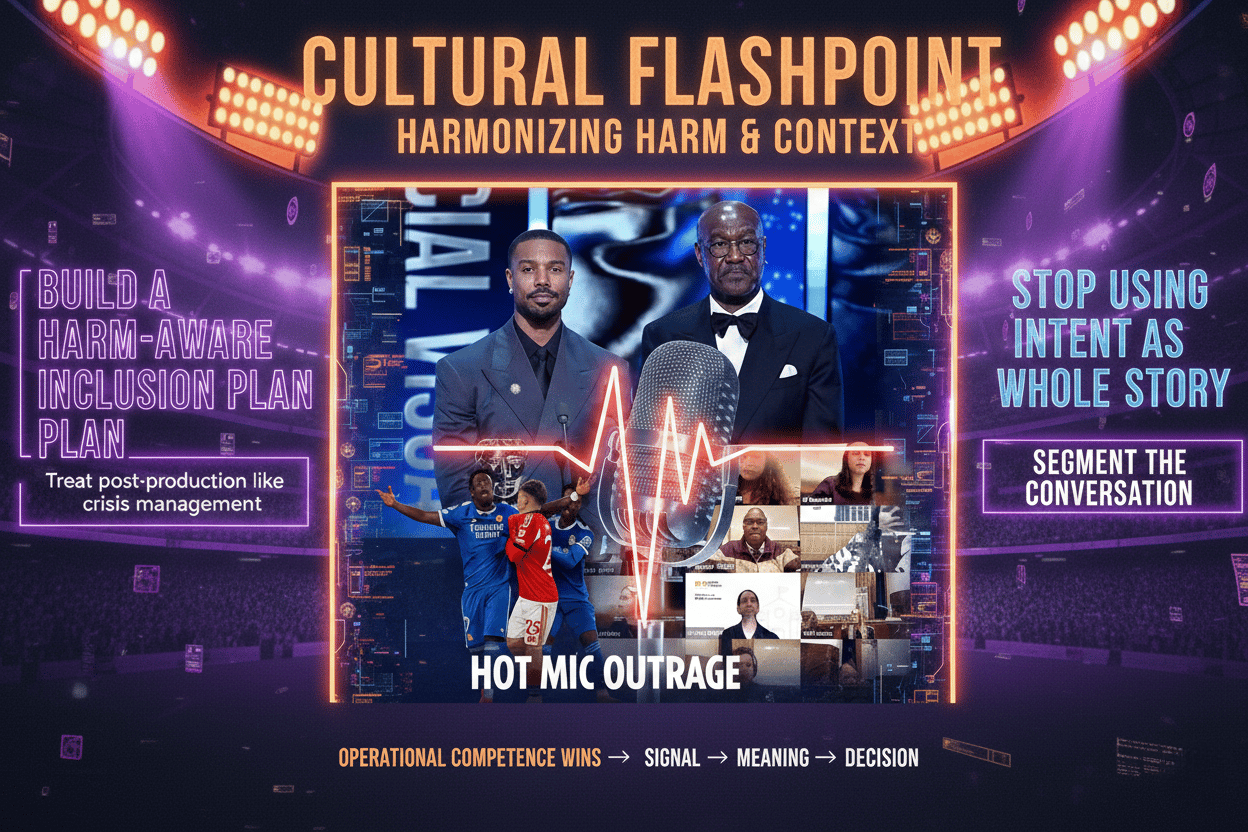
A single word can change the temperature of a room
Black History Month has a way of turning the volume up on what was already loud. February is supposed to be a moment to reflect, celebrate, and build. Instead, it often becomes a month where the contrast is impossible to ignore.
Because the world is still doing what the world does.
Viral clips that travel faster than context. Comment sections that move like mobs. And then, Sunday night, the BAFTAs happened, and a moment landed like a brick through glass.
Michael B. Jordan and Delroy Lindo were on stage presenting. Everybody is dressed to the nines. The room is polished, prestigious, London-glossy. It’s the kind of night where you can feel the machinery of “important” humming in the background.
Then it happened.
From the audience, someone shouted the N-word.
If you have ever been in a room when something like that hits the air, you know the feeling. It’s not just shock. It’s your body doing math before your brain finishes the sentence. It’s the pause where people look around, trying to figure out what they just heard, and what the room is about to do next.
And here’s what stood out to me immediately.
Jordan and Lindo stayed composed.
I don’t mean “they didn’t feel it.” I mean they understood the moment they were in, and what the world tends to do to Black men who react “wrong” in public. Their composure did not just protect them, it protected the narrative from being hijacked into something else.
Because let’s be real: if their reaction had been louder, angrier, more human, the conversation would have shifted away from the harm and onto their response. It would have turned into a debate about tone, professionalism, optics. The usual stuff people reach for when they want to avoid naming the actual wound.
That’s why I keep calling their restraint world-class. Not because anyone should have to carry that burden, but because the burden exists.
Now let me rewind for a second.
I still remember the first time I was called that word to my face. I was 13. And at 13, you don’t have a framework. You have a rush of heat, a rush of embarrassment, a rush of anger, and whatever you were taught about what you’re supposed to do when someone disrespects you.
I did not handle it perfectly. I handled it like a 13-year-old who had never been asked to hold something that heavy.
As an adult, I understand the trap better.
When that slur comes from someone trying to provoke you, the goal is not just to insult you. The goal is to pull you into a reaction they can point at later. It’s bait. It’s a setup. It’s, “Let me push you, then blame you for how you fell.”
So watching Jordan and Lindo, I was proud, and I was frustrated.
Proud because they showed mastery.
Frustrated because they had to.
And then the story got more complicated.
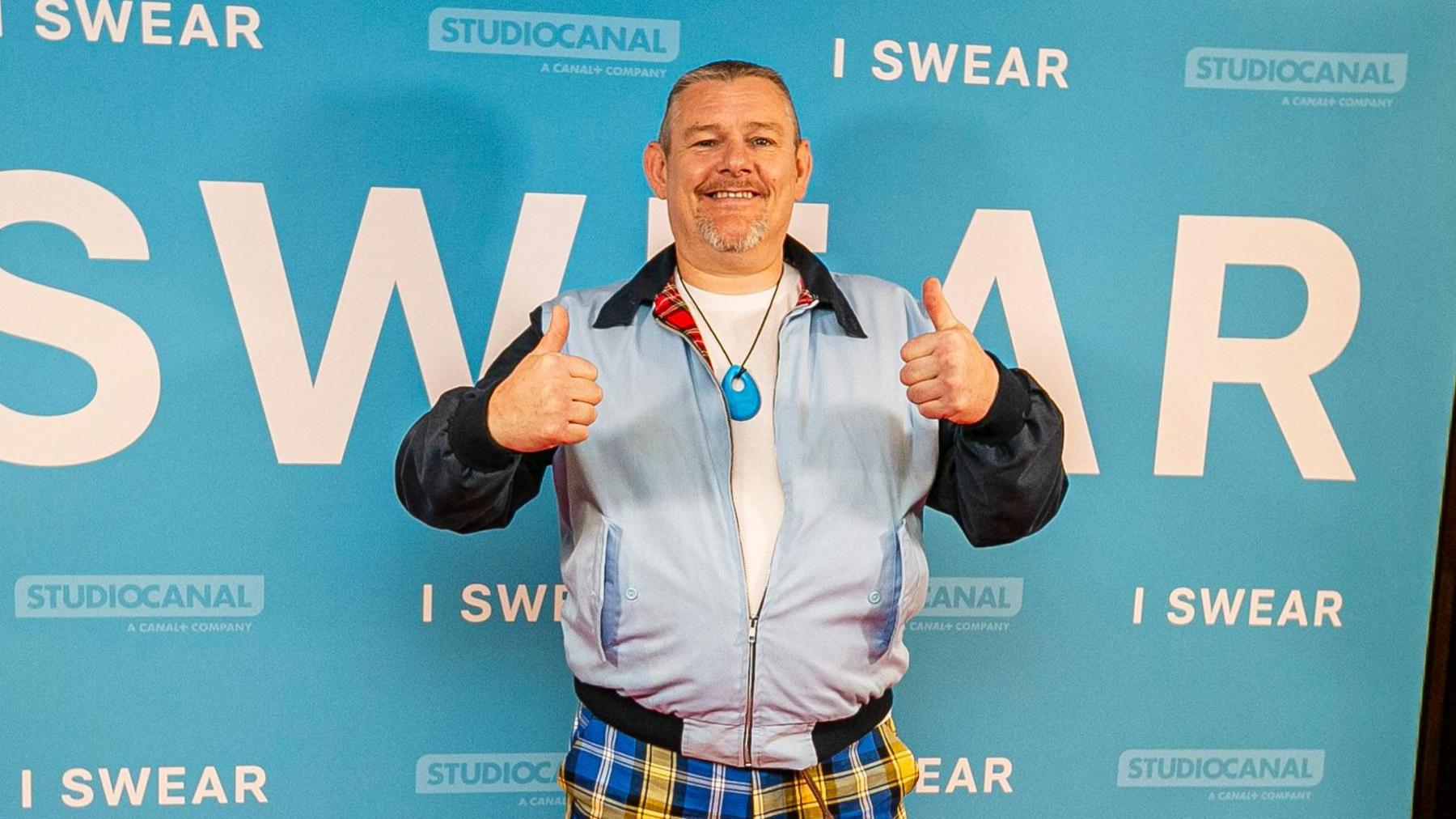
The person who shouted the slur was identified as John Davidson, a Tourette’s campaigner. Reporting described the outburst as involuntary, and tied it to Tourette syndrome, including discussion of coprolalia. Davidson later said he was deeply mortified.
So now we are not dealing with one issue.
We are dealing with several, at the same time, on a stage, in a room full of people, inside a broadcast machine, inside an internet that makes everything louder:
A racial slur that still lands like a weapon.
A disability that can make public spaces feel unsafe, isolating, and humiliating.
An institution trying to be inclusive and still causing harm.
A media decision that turned a painful moment into a global clip.
This is what I mean when I say culture lives inside everything, including the things we do not fully understand yet.
Because disability culture is real.
If you have never lived with Tourette’s, especially a form that includes involuntary vocal outbursts, it’s hard to grasp what it means to walk into rooms knowing your body might betray you at the worst possible time. And it’s clear from the reporting that people living with Tourette’s watched this unfold with a different kind of fear, one rooted in stigma and misunderstanding.
And still, impact is real too.
Context can explain what happened without erasing what it felt like to receive it.
That is the tension everybody tried to simplify into a team sport.
Some people wanted to make it only about racism.
Some people wanted to make it only about disability.
But this moment was a collision, and collisions don’t let you pick just one lane.
Here’s where I’m going to get a little more specific about why this stuck with me for a full two days.
Because the outburst was one thing.
The broadcast decision was another.
The BBC later apologized and BAFTA announced a comprehensive review. Reporting also noted that the BBC had managed to edit out other content, which is why so many people asked, plainly, how this made the final cut.
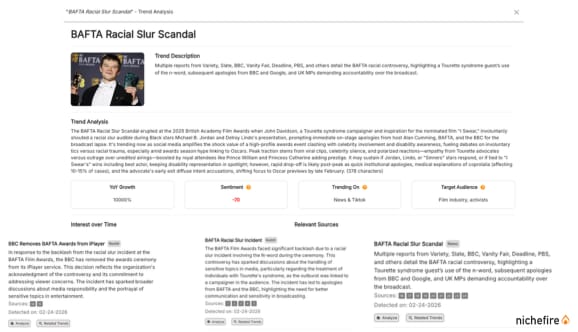
Let that sit.
Someone had the opportunity to reduce harm. Someone still let the moment travel.
And once it traveled, the internet did what it does. Outrage surged. People argued. The clip became a cultural grenade that kept rolling because it had everything the algorithm likes: shock, pain, conflict, and a moral debate with no easy answer.
This is the part where my guy Evante Daniels posted something that put language to what I was feeling.
He called it “operational competence.”
Not vibes. Not intentions. Not apologies after the fact.
Operational competence, powered by cultural intelligence.
And that phrase matters because it forces the question institutions hate to answer:
What systems were in place to prevent the worst-case scenario, and what systems failed?
Because if the live audience had been warned that Davidson might tic, why wasn’t that context handled better in the broadcast? Why did the harm still get distributed at scale?
That’s not a “gotcha.” That’s a governance question.
It’s also why I had to check myself after my first emotional reaction.
My initial response was: how could they allow this?
My next-day response, after reading more and listening more, was: everyone in this situation is carrying something heavy.
Jordan and Lindo had to swallow harm in public.
Davidson has to live with a condition that can turn him into a headline, even when he’s trying to advocate for empathy.
And the institution still has to be held accountable for how it designed the room, managed the risk, and edited the story.
This is the full spectrum.
And it’s uncomfortable because it asks for two skills at once:
The ability to name harm without hesitation.
The ability to hold complexity without rushing to flatten it.
If there’s a single reason I think this post deserves more space, it’s this:
This moment is not just about what someone said.
It’s about what a system chose to amplify.
It’s about how fast the world demands grace from Black people, while rarely building guardrails to protect us from having to extend that grace in the first place.
It’s about how disability inclusion can be real and necessary, and still require thoughtful planning so inclusion doesn’t become collateral damage for other vulnerable groups.
And it’s about the fact that culture isn’t a side quest.
Culture is the operating system.
So when people ask, “How did this happen?”, my answer is: it happened the same way most cultural flashpoints happen.
A collision met a microphone. A system failed a test. Then the internet turned it into a referendum.
That’s why we’re talking about it here.
Not to argue about who deserves empathy, everybody does.
But to learn what this moment reveals, and to build better systems so the next room doesn’t have to go silent the same way.
Key Insight
Culture is a full-spectrum problem, especially in public.
This BAFTAs moment is a reminder that “unknown unknowns” are not rare edge cases. They are what happens when multiple cultural realities collide in real time, and your systems are not built to handle the collision with care.
Two things can be true at once:
The harm is real.
The intent is not the same as a deliberate act of hate.
The Playbook
Evante was right, operational competence wins
Build a harm-aware inclusion plan
Inclusion without safeguards is not inclusion, it’s exposure. If a guest’s disability could lead to disruptive or harmful language, plan for it with seating strategy, staff briefing, presenter support, live response protocols, and a post-incident plan that centers the harmed while protecting dignity for the guest.Treat post-production like crisis management
Editing is not neutral. If a moment can be cut to reduce harm, and you leave it in, you’re choosing downstream impact.Stop using intent as the whole story
“Involuntary” does not erase impact. “Impact” does not automatically prove intent. You can hold both truths without turning it into a team sport.Segment the conversation, don’t chase the loudest take
This discourse splits fast: race, disability, institutional accountability, media incentives. If you lump it all together, you will misread the room.
How to Use Cultural Listening Here
This is exactly what “unknown unknowns” look like in the real world.
For insights teams in CPG, retail, and QSR, the job is not just spotting trends. It’s spotting risk, mapping reaction, and translating cultural complexity into something a leadership team can act on, fast.
A practical workflow for moments like this:
-Map the moment across channels (news, social, advocacy communities).
-Separate the themes (racial harm, disability education, institutional response, broadcast choices).
-Identify the emotional drivers in each cluster.
-Turn it into a preventive checklist for your next event, campaign, or partnership.
The goal is not to avoid hard moments. The goal is to be ready for them with competence, not panic.
Want the unfiltered version? Catch me live on Twitch.
Let’s explore the power of culture, one signal at a time.
Lil’ Surfing 🌊
Lil Surfing started as a catch-all: a place to stash the strange, funny, and culturally loud. And it still is, but now it’s powered by Firesearch.
Each week, I’ll be dropping a short culture scan: a peek into what’s bubbling beneath the surface, based on live searches from Nichefire’s system. You’ll still get the weird. You’ll just get it with a sharper edge.
This week, I ran a Firesearch on “BAFTA”, “John Davidson Tourette’s”, and “BBC edit decision”, and here’s what surfaced:
The conversation split into two tribes fast, and both think they’re protecting someone
One half of the discourse anchored on racial harm and the weight of the slur. The other half anchored on disability stigma and involuntary tics. What’s notable is how quickly people started treating empathy like a limited resource: as if understanding one side meant betraying the other. The deeper signal is that we still don’t have shared language for moments where two vulnerable groups are impacted at the same time.
“It aired” became the bigger scandal than “it happened”
The loudest outrage wasn’t only about the outburst, it was about the broadcast decision. Once people realized this wasn’t a purely live moment floating away in the room, the questions shifted to systems: Who reviewed it? Who approved it? What got removed, and what got left in? That edit decision became the accelerant because it reframed the incident from “unfortunate” to “avoidable.”
First-hand accounts acted like cultural counterweights
A recurring pattern in the search results was crowd witness commentary: people explaining the room, the context, and what attendees were told beforehand. That matters because witness narratives function like a pressure valve. They don’t erase harm, but they can restore nuance when social feeds try to flatten everything into a single villain.
“Operational competence” showed up as the real takeaway
This is where Evante Daniels’ phrase keeps echoing: operational competence. People weren’t only mad, they were asking why there wasn’t a plan. Seating, stage management, briefing, post-production safeguards, crisis protocol, all of it. The signal is clear: audiences are less tolerant of institutions that act surprised by predictable cultural collision.
Why this ties back to the full-spectrum point
This is exactly what I mean when I say culture lives inside everything, including the things we don’t fully understand yet. The slur is harm. Tourette’s is real. Stigma is real. Impact is real. Editing is a choice. When those realities collide, the system either reduces harm or amplifies it.
🔗 Watch the live Firesearch walkthrough
💬 Got a theme you want me to run for a month? Reply with your pick.
💬 Your journey into the world of cultural insights starts here!
Thank you for being part of the Lil’ Signals community. Together, we’ll decode the world, one signal at a time.
Reply